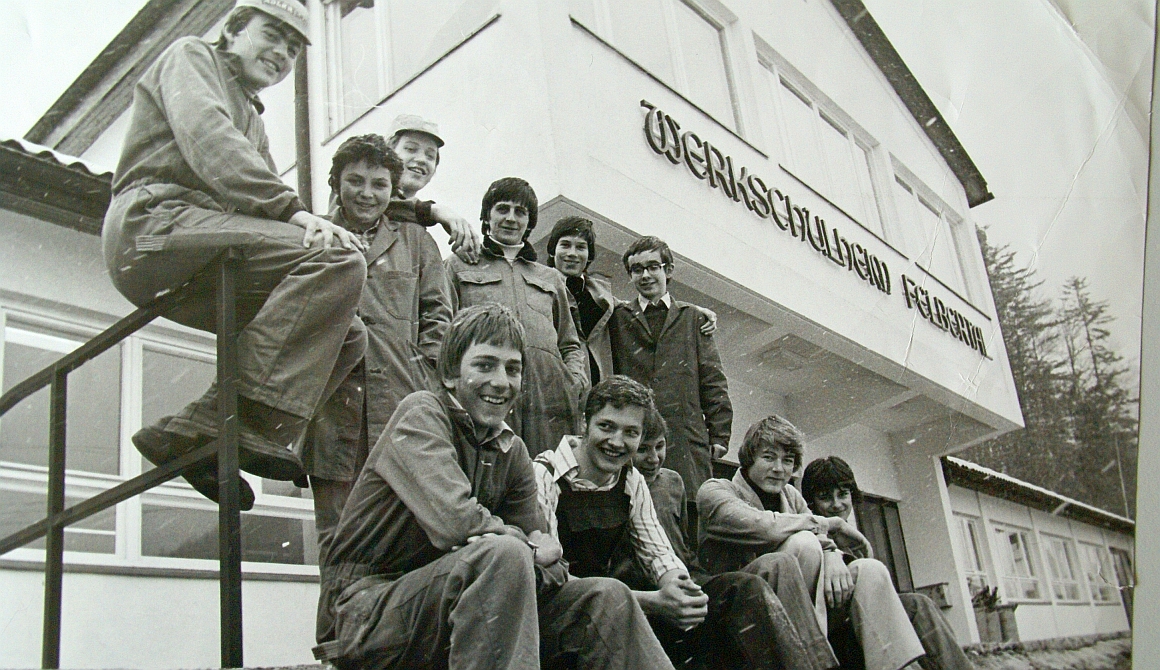


The Werkschulheim Felbertal is a private grammar school with public rights, combined with a boarding school for girls and boys. The educational concept, which has been tried and tested for more than 70 years, combines a high level of general education, manual labour and social learning. This interplay of theoretical, practical and human education is education with vision and opens up the best opportunities for the future.
The pupils conclude the programme with the AHS-Matura, which entitles students to study at any university or university of applied sciences. Furthermore, our graduates complete the Final apprenticeship examination in the respective craft.
The Werkschulheim Felbertal is a private grammar school with public status.
The school is run by the Verein zur Förderung von Werkschulheimen.
Our school is committed to Christian values.
Education, as we teach it, results from the comprehensive and lively unity of the areas of school, crafts and home life.
This combination of broad general education, technical training and social learning enables a unique interplay of theoretical, practical and human education. As a result, our students gain a deeper understanding of the cultural, economic and social contexts of our world.
Pupils, pupils, teachers, parents and all other staff at our school see themselves as partners. We treat each other in an atmosphere of mutual respect.
Young people are at the centre of our joint activities and efforts.
We offer a broad general education and promote the cognitive, sporting and artistic skills of our pupils, while also using modern teaching methods and teaching in a way that is relevant to life.
Our target group is gifted pupils who are willing to perform. We offer individualised support when learning problems arise.
We are increasingly teaching interdisciplinary and project-orientated lessons in conjunction with craft lessons. In this way, we promote „learning for life“ and the flexibility to help shape the rapid developments of the future.
We develop the creative and practical skills of our students through intensive work lessons in the lower school and in-depth training as a carpentry technician, mechanical engineering technician or mechatronics technician in the upper school, enabling them to enter the world of work directly.
Through this practical training, we also teach teamwork, accuracy, perseverance, decision-making and problem-solving skills.
Our students gain an insight into the professional world of tradespeople, gain an understanding of their concerns and acquire the foundations for management tasks in the business world.
We offer a family-like education in small groups in which the pupils can feel comfortable. We attach great importance to co-operation with parents.
Through the intensive life in the community of the boarding and half-boarding school, our pupils acquire a high level of social competence.
The educator is also a teacher and lives with his group in his own house. The pupils value him as a direct reference person and he supports them with his individual skills.
We offer regular and differentiated learning support as well as meaningful leisure activities with teachers and educators. We promote the sporting and artistic development of our pupils in a targeted and broad-based way.
Particularly important to us are the adventurous activities that the group and teachers organise together outside the home, such as our traditional camp and hiking week.
Our graduates complete their 9-year training programme with a final apprenticeship examination (journeyman's examination) and the AHS Matura. This attractive dual qualification entitles them to study at any university and fulfils the requirements for the master craftsman's examination.
Werkschulheimstraße 11, A-5323 Ebenau

Chairman of the association
Function | Name |
|---|---|
Chairman | Christoph Paulweber |
Honorary Chairman | Wolfgang Saliger |
Deputy Chairman | Josef Resch |
Secretary | Waltraud Ablinger-Ebner |
Treasurer | Gerhard Haggenmiller |
Assessor | Manfred Pammer Irene Schulte Jakob Steinkogler-Caesar Anita Wautischer |
Auditor | Rupert Hengster Wolgang Hoffmann |
Co-opted assessors | Herbert Bachler Hans Bigenzahn Heinz Edenhofner Hannes Fürstaller Tanja Graf Hans Gruber Stefan Idinger Ludwig Kofler Winfried Kogelnik Peter Jesch |
Im August 1951 entstand beim 7. Weltjamboree in Bad Ischl die Idee, nach bayerischem Vorbild auch in Österreich ein Werkschulheim zu gründen. Bereits einen Monat später wurde mit der Gründung des Trägervereins der Grundstein gelegt.
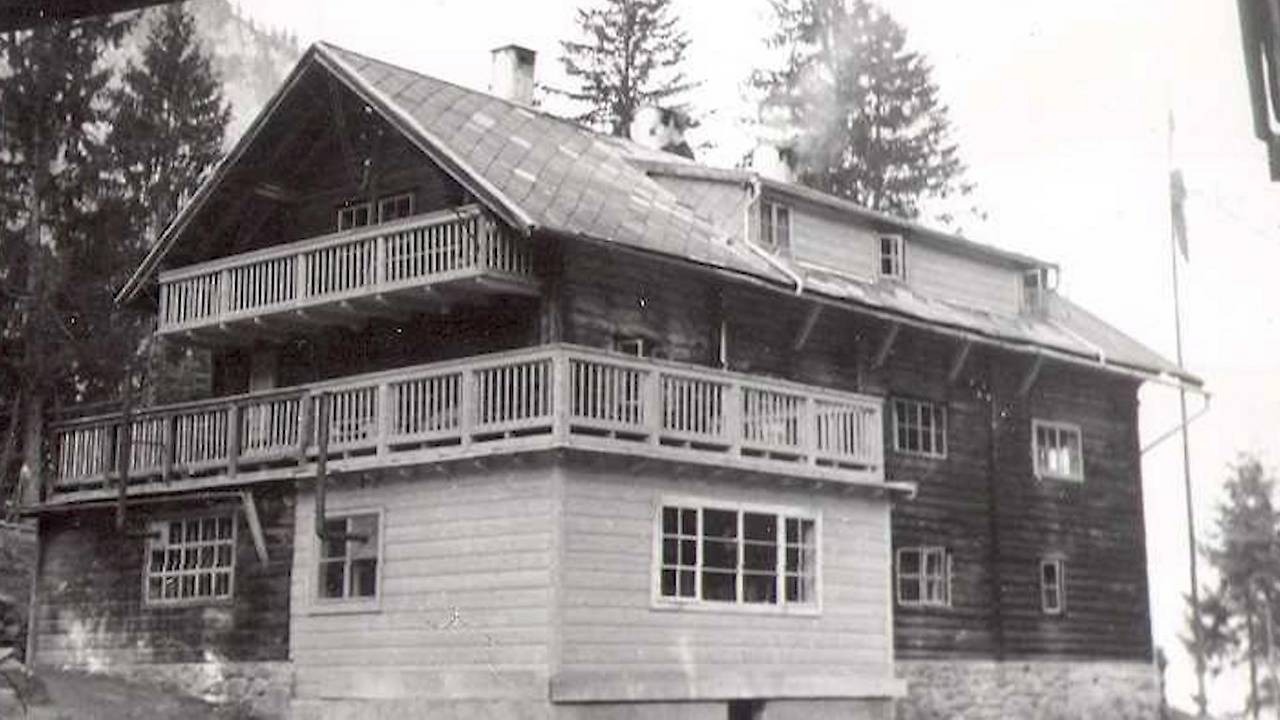
Das erste Schuljahr begann am 14. September 1951 im Felbertal bei Mittersill mit 25 Schülern und sechs Erwachsenen. Schon in den Anfangsjahren entwickelte sich das Werkschulheim erfolgreich und erlangte rasch nationale und internationale Anerkennung. 1954 erhielt die Schule das Öffentlichkeitsrecht und konnte erstmals staatlich anerkannte Zeugnisse ausstellen.
Aufgrund wachsender Schülerzahlen und räumlicher Einschränkungen entschied man sich Anfang der 1960er-Jahre für einen Standortwechsel. In Ebenau bei Salzburg fand man ideale Voraussetzungen, 1964 konnten die neuen Gebäude bezogen werden. Der Schultyp „Werkschulheim“ wurde 1962 gesetzlich verankert.
In den folgenden Jahrzehnten wuchs die Schule kontinuierlich weiter: neue Ausbildungszweige, moderne Werkstätten, zusätzliche Internats- und Schulgebäude sowie die Einführung des Halbinternats prägten die Entwicklung. 2001 feierte das Werkschulheim sein 50-jähriges Bestehen als eine der erfolgreichsten Privatschulen Österreichs.
Seit 2011 steht das Vollinternat auch Mädchen offen. Weitere Modernisierungen – zuletzt die Sanierung der Internatsgebäude – sicherten die Zukunftsfähigkeit der Schule.
Von Beginn an verbindet das Werkschulheim gymnasiale Bildung mit handwerklicher Ausbildung. Projektwochen, Lernen in kleinen Gruppen und pfadfinderische Werte prägen das Schulleben bis heute. Das originale Lagertor des Weltjamborees von 1951 erinnert am Campus an die Gründungsgeschichte – ebenso wie die schuleigene Pfadfindergruppe, die diese Tradition aktiv weiterführt.
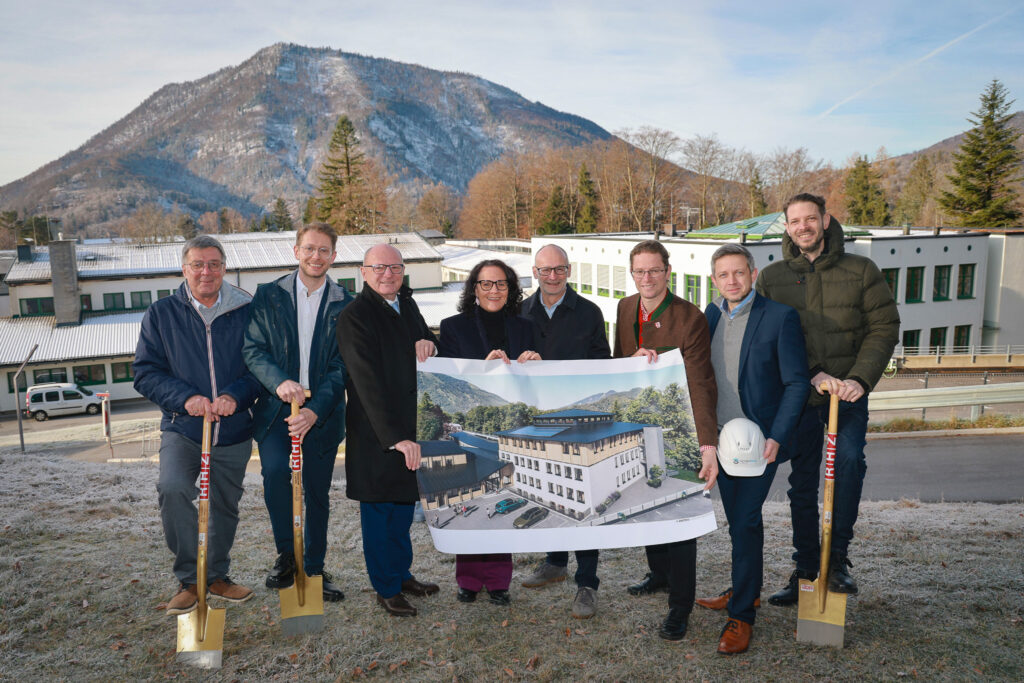
Errichtung eines Parkdecks mit 39 Stellplätzen zur Verbesserung der Parkplatzsituation. Parallel dazu erfolgten die Planungsarbeiten für den Schulumbau.
The refurbishment of the boarding school continued and was completed in 2016 with the finalisation of House 8.
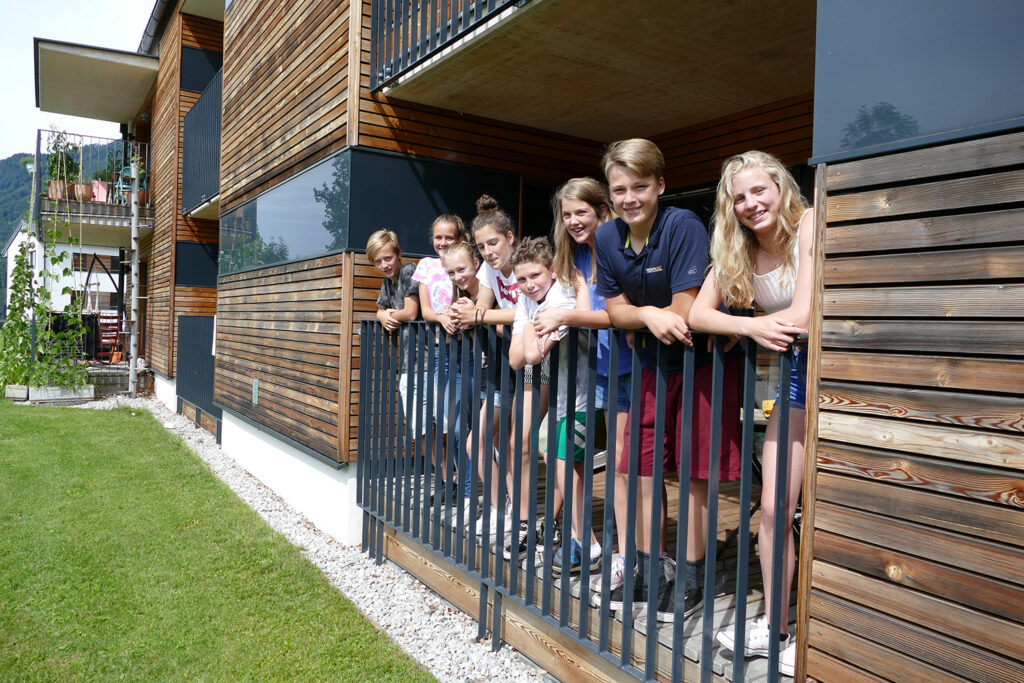
In 2011, the Werkschulheim opened the full boarding school for girls. A total of around 320 boys and girls attended the school, of which around 180 attended the boarding school.
The next modernisation steps took place in 2008 with the opening of the new gymnasium and the new half-boarding school, and a year later with the opening of the new boarding school building, House 7.
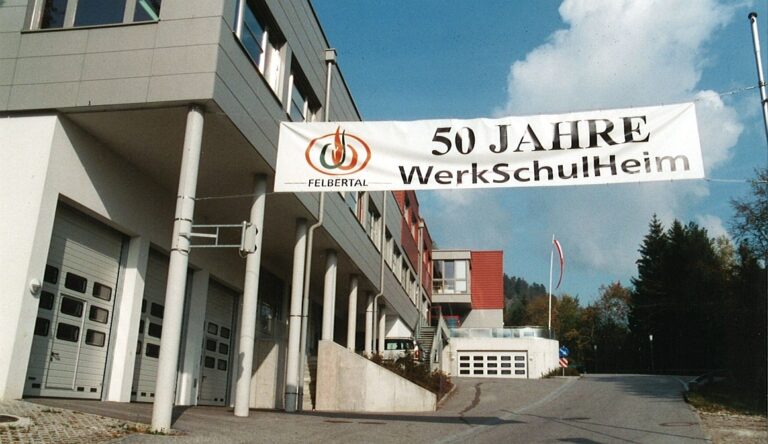
At the 50th anniversary celebrations in 2001 (speech: Dr Erhard Busek), the Werkschulheim presented itself as one of the most successful public schools in Austria with around 290 pupils. Numerous pedagogical innovations (European Comenius project, introduction of an upper secondary school, computer driving licence in the lower school, restructuring of craft training, etc.) ensured the high attractiveness of our school for the future.